
Research & Innovation
Exploring the boundaries of technology across diverse fields. Dive into our ongoing and completed projects driving global change.
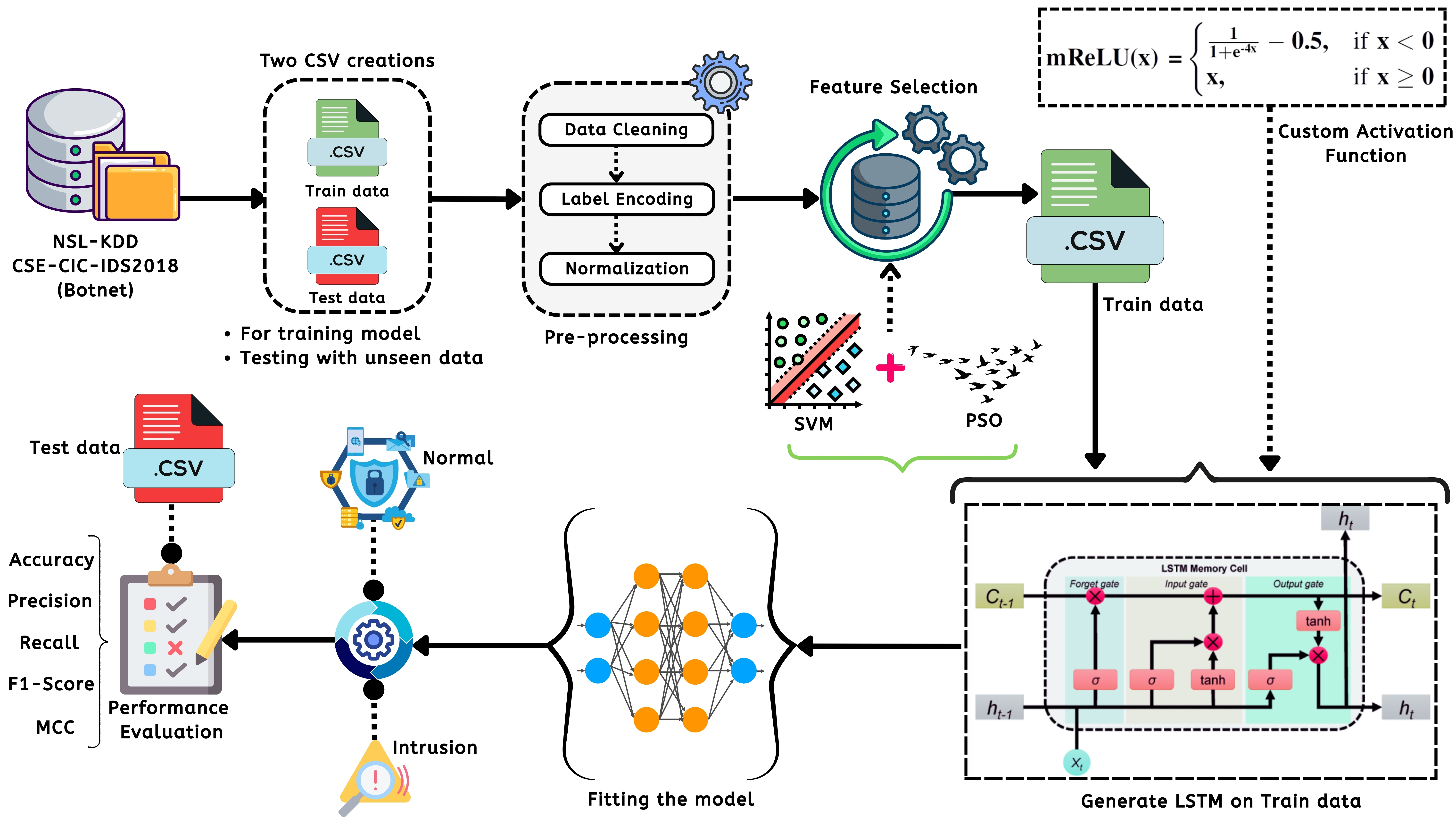
Intrusion Detection Project
Title: Enhancing Intrusion Detection with Image-Based CNN and CTGAN Synthetic OversamplingDescription:This project develops an intrusion detection framework using image-based representations of network traffic and CNN-based classification. The NSL-KDD dataset is transformed into image-like feature representations so that convolutional neural networks can learn spatial patterns from network behavior. To address class imbalance, CTGAN-based synthetic oversampling is used to generate additional minority-class samples. The framework supports five-class intrusion classification and evaluates the effect of synthetic data on detection performance. This project contributes to cybersecurity research by combining tabular-to-image transformation, deep learning, and generative oversampling for more balanced intrusion detection.
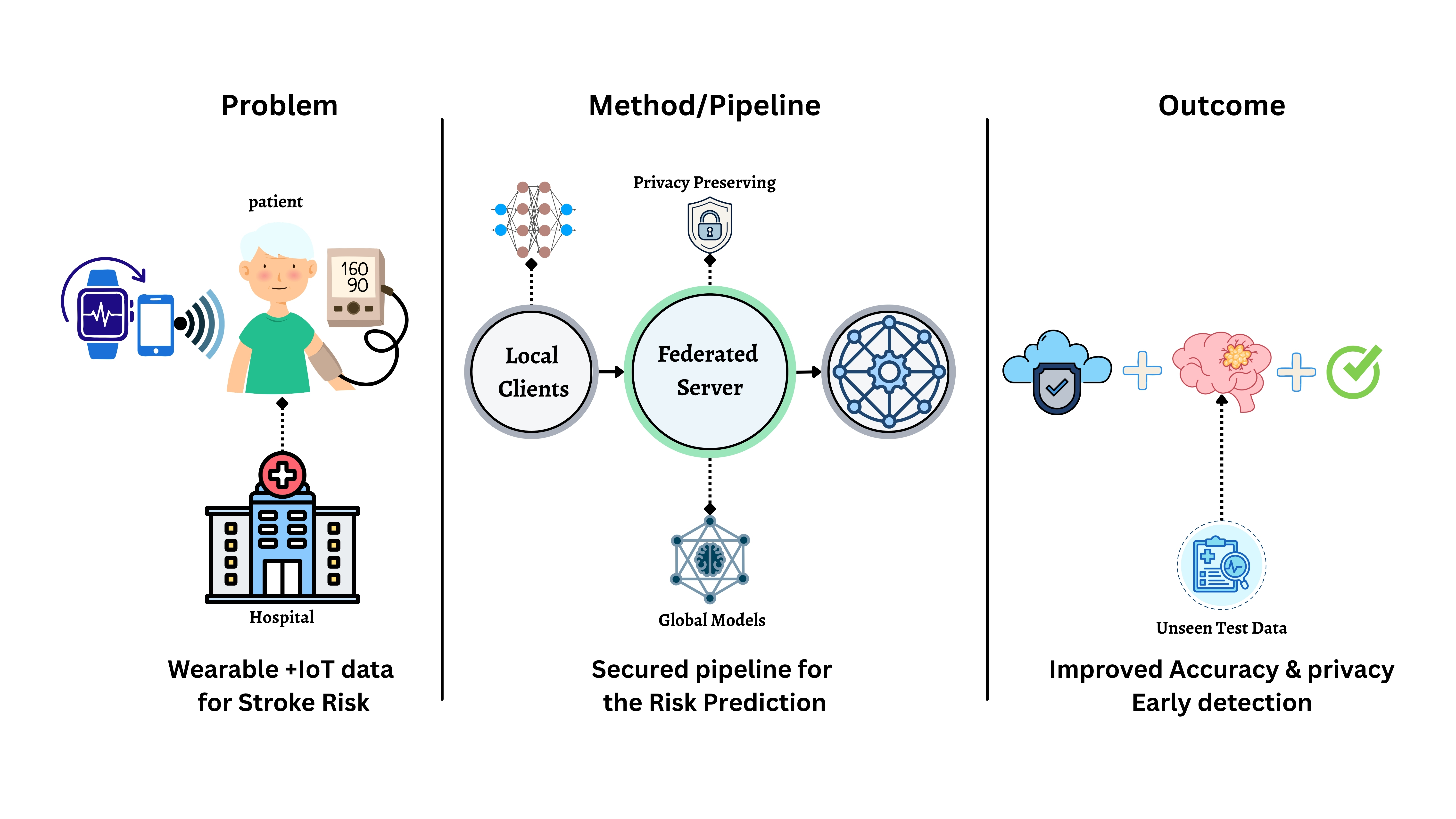
Stroke Risk Prediction Project
Title: Privacy-Preserving Federated IoT Architecture for Early Stroke Risk PredictionDescription:This project introduces a privacy-preserving federated IoT framework for early stroke risk prediction. The system is designed for smart healthcare environments where patient-related data may be collected from IoT devices, wearable sensors, or distributed healthcare sources. Instead of centralizing sensitive patient information, the proposed framework trains models locally and shares protected model updates through a federated learning process. The project aims to support early stroke-risk monitoring while reducing privacy risks linked with centralized data collection. It combines federated learning, IoT-based health monitoring, and privacy-aware model training to support secure and scalable healthcare intelligence.
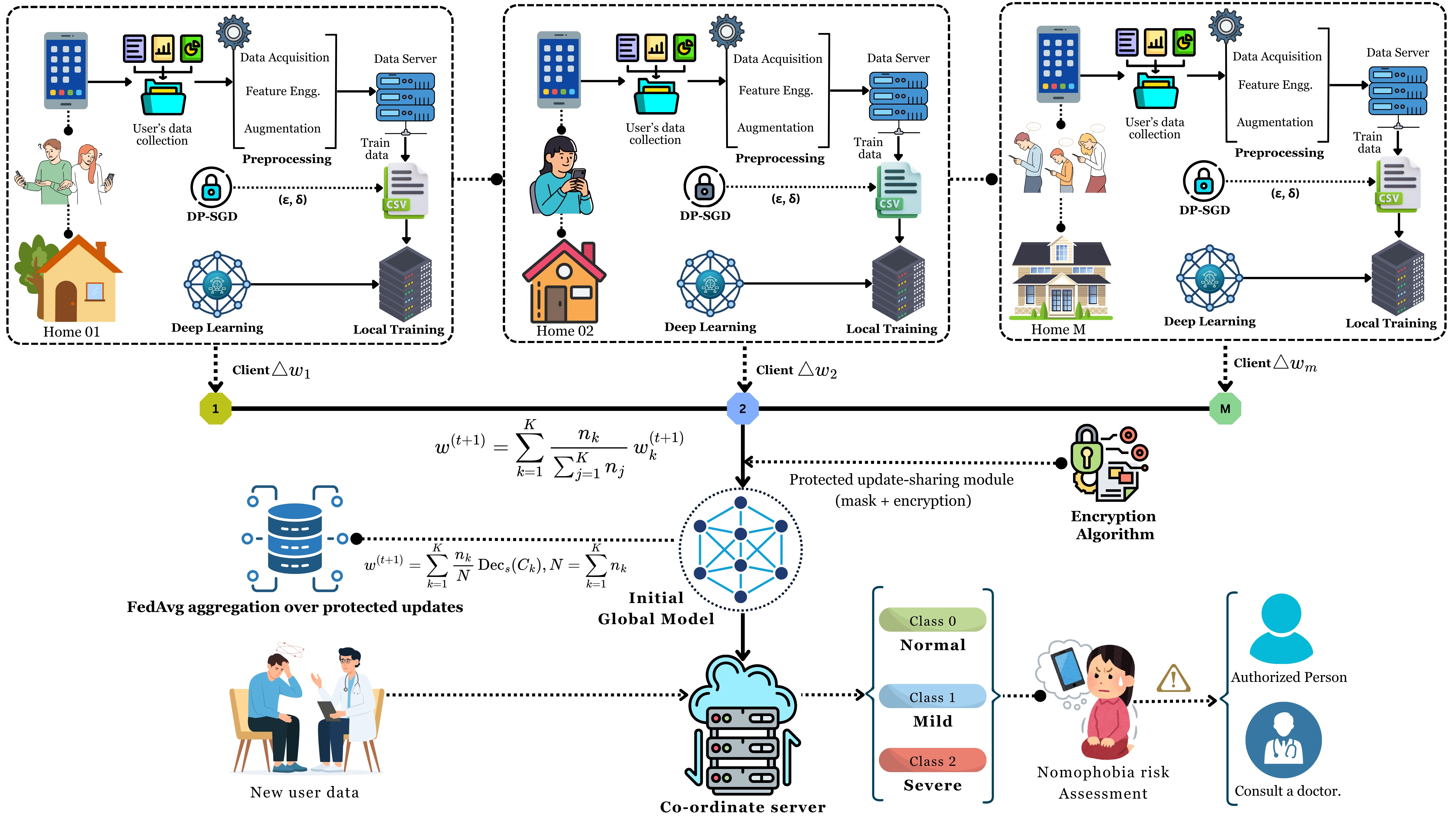
Nomophobia Project
Title: Privacy-Preserving Cascaded Federated Deep Learning for Nomophobia Risk Prediction with Encrypted Masked UpdatesDescription:This project proposes a privacy-preserving federated deep learning framework for predicting nomophobia risk from smartphone usage behavior. The study uses smartphone usage records to construct three risk levels: Normal, Mild, and Severe. A cascaded federated learning pipeline is designed using multiple deep learning models, including MLP, ResMLP, Wide & Deep, TabNet-style gating, CNN, RNN, and LSTM. To protect user data, the framework integrates DP-SGD and encrypted transport of masked model updates. The project also includes privacy accounting, robustness analysis, synthetic-data validation, and leakage-risk analysis. The study presents a proof-of-concept framework for privacy-aware behavioral risk prediction while clearly noting that the labels are constructed from usage features and are not clinical diagnoses.
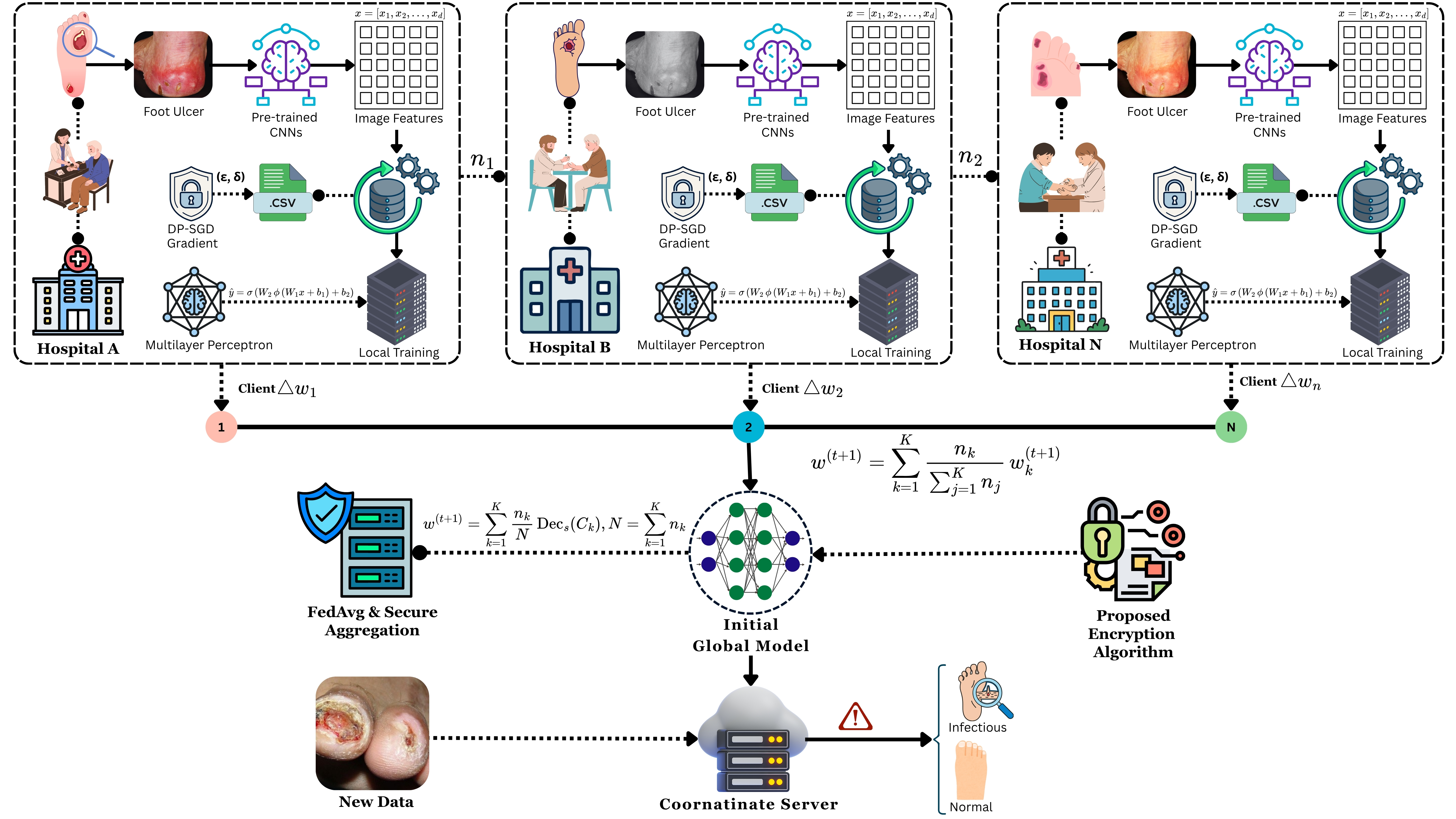
Diabatic Foot Ulcer Diagnosis Project
Title: Backbone-as-Client Federated Learning with Differential Privacy for Diabetic Foot Ulcer Image ClassificationDescription:This project develops a privacy-preserving federated learning framework for diabetic foot ulcer image classification. Instead of sharing raw medical images, pretrained CNN backbones such as VGG19, ResNet50, and DenseNet121 are used as local feature extractors, and only model updates are shared during federated training. The framework combines FedAvg, differential privacy, and protected update transmission to improve data privacy in medical image analysis. The study focuses on binary DFU classification and evaluates multiple MLP-based classification heads under non-IID client settings. This work highlights the potential of federated learning for privacy-aware diabetic foot ulcer screening while acknowledging the need for larger clinical datasets and external validation.