

Research | Innovate | Excel Turning Ideas into Innovation
Transforming data into insights, one algorithm at a time
Featured Research
Discover our most impactful research initiatives.
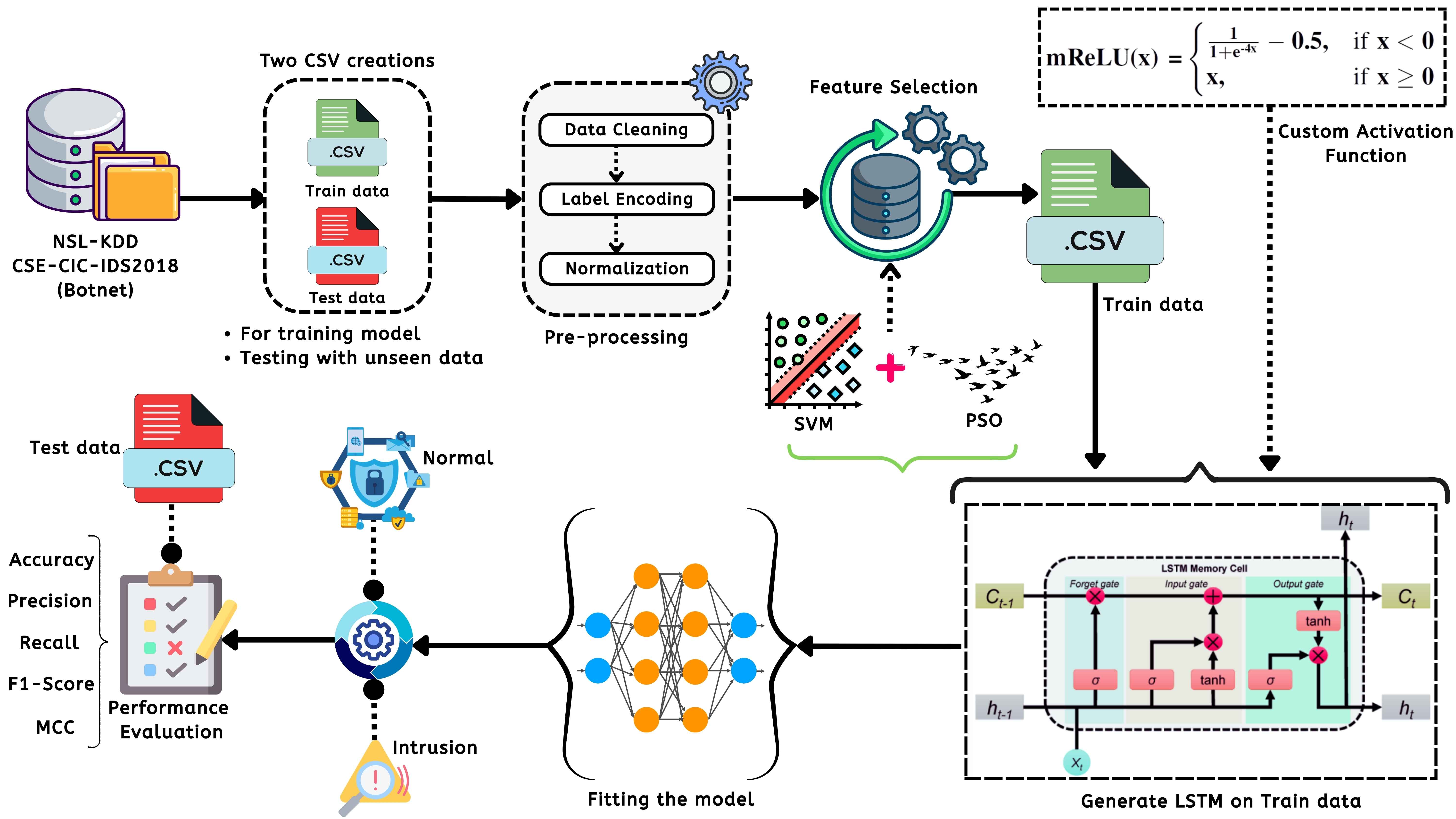
Intrusion Detection Project
Title: Enhancing Intrusion Detection with Image-Based CNN and CTGAN Synthetic OversamplingDescription:This project develops an intrusion detection framework using image-based representations of network traffic and CNN-based classification. The NSL-KDD dataset is transformed into image-like feature representations so that convolutional neural networks can learn spatial patterns from network behavior. To address class imbalance, CTGAN-based synthetic oversampling is used to generate additional minority-class samples. The framework supports five-class intrusion classification and evaluates the effect of synthetic data on detection performance. This project contributes to cybersecurity research by combining tabular-to-image transformation, deep learning, and generative oversampling for more balanced intrusion detection.
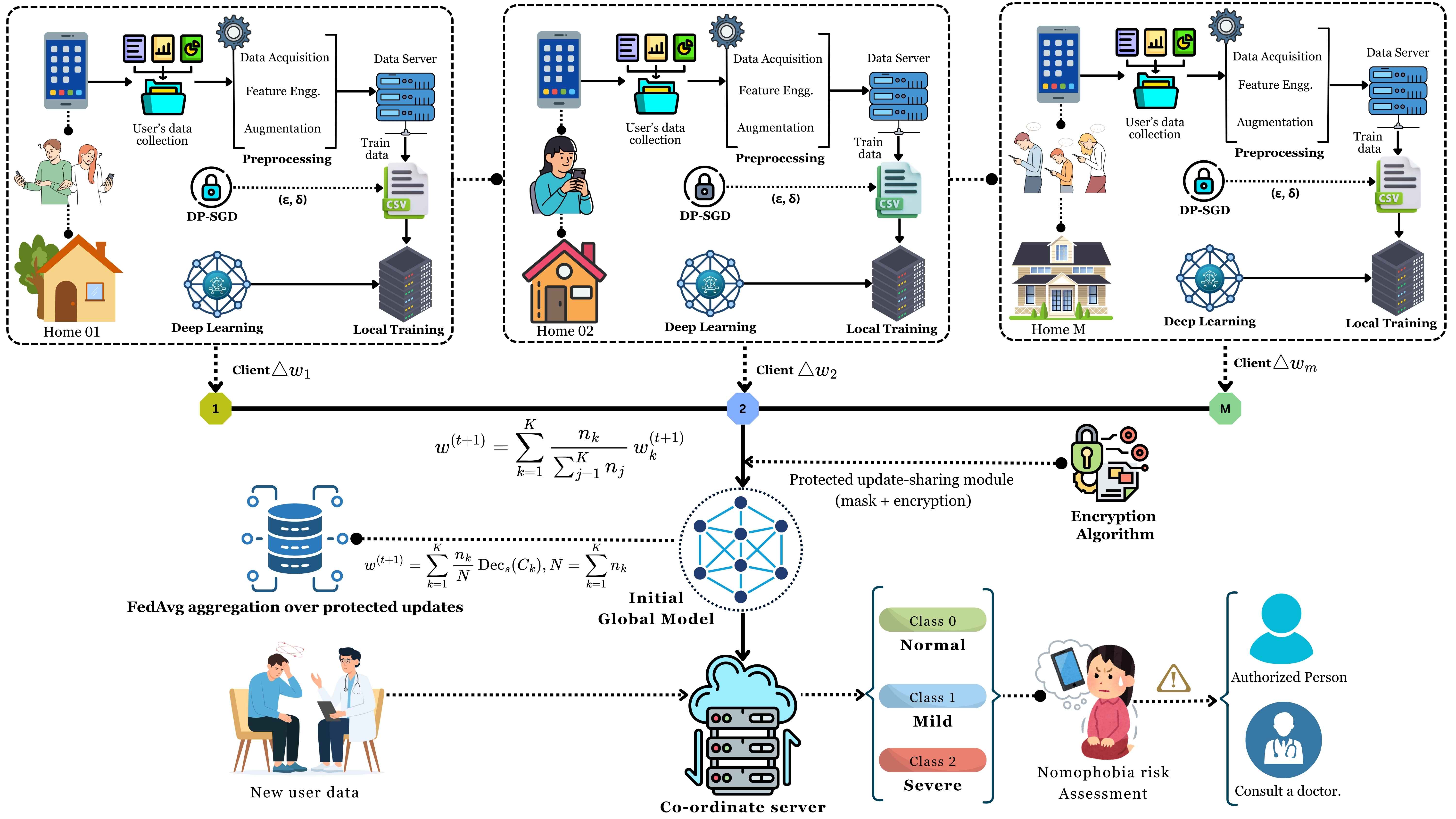
Nomophobia Project
Title: Privacy-Preserving Cascaded Federated Deep Learning for Nomophobia Risk Prediction with Encrypted Masked UpdatesDescription:This project proposes a privacy-preserving federated deep learning framework for predicting nomophobia risk from smartphone usage behavior. The study uses smartphone usage records to construct three risk levels: Normal, Mild, and Severe. A cascaded federated learning pipeline is designed using multiple deep learning models, including MLP, ResMLP, Wide & Deep, TabNet-style gating, CNN, RNN, and LSTM. To protect user data, the framework integrates DP-SGD and encrypted transport of masked model updates. The project also includes privacy accounting, robustness analysis, synthetic-data validation, and leakage-risk analysis. The study presents a proof-of-concept framework for privacy-aware behavioral risk prediction while clearly noting that the labels are constructed from usage features and are not clinical diagnoses.
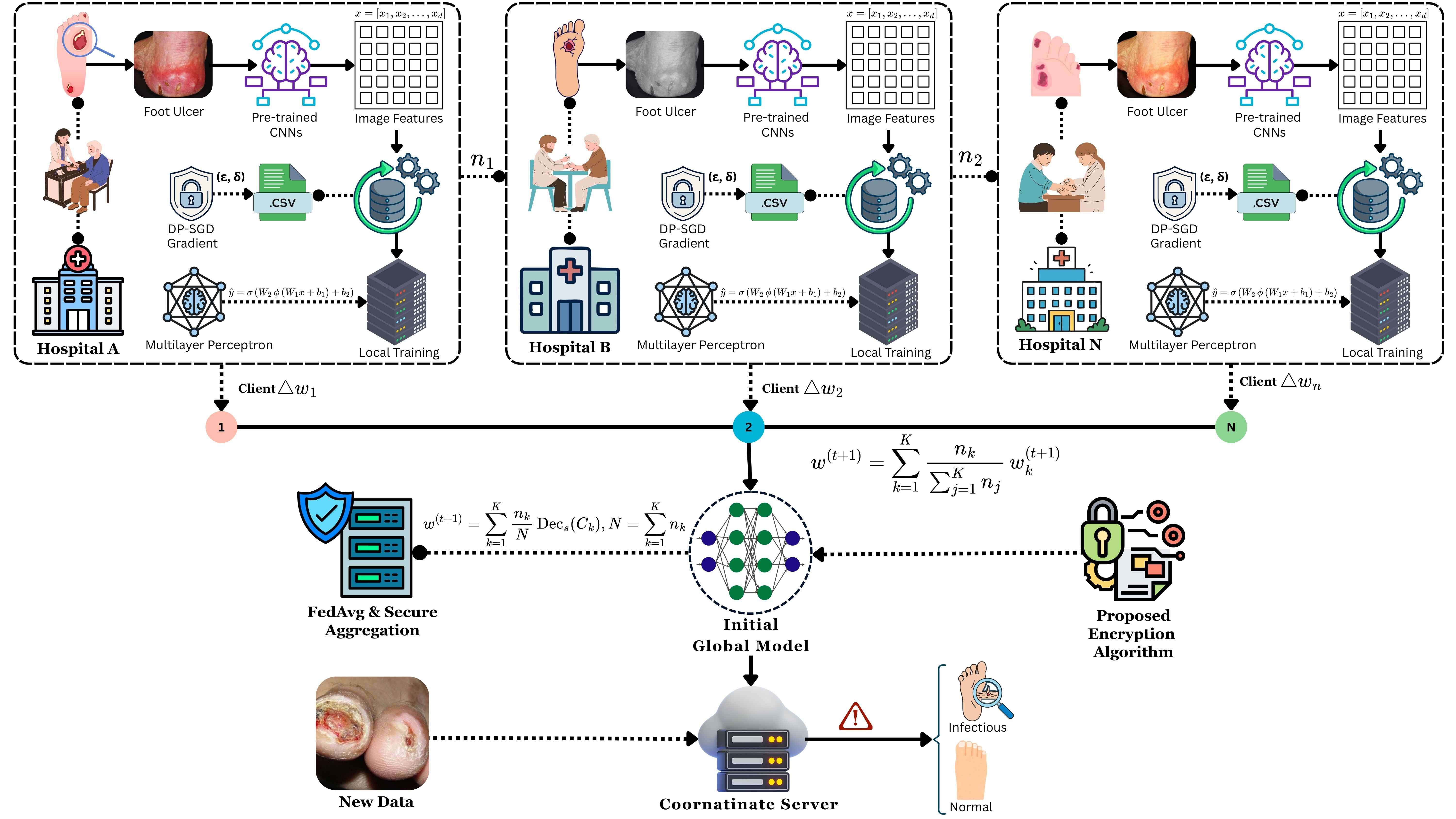
Diabatic Foot Ulcer Diagnosis Project
Title: Backbone-as-Client Federated Learning with Differential Privacy for Diabetic Foot Ulcer Image ClassificationDescription:This project develops a privacy-preserving federated learning framework for diabetic foot ulcer image classification. Instead of sharing raw medical images, pretrained CNN backbones such as VGG19, ResNet50, and DenseNet121 are used as local feature extractors, and only model updates are shared during federated training. The framework combines FedAvg, differential privacy, and protected update transmission to improve data privacy in medical image analysis. The study focuses on binary DFU classification and evaluates multiple MLP-based classification heads under non-IID client settings. This work highlights the potential of federated learning for privacy-aware diabetic foot ulcer screening while acknowledging the need for larger clinical datasets and external validation.
Featured News
Stay updated with our most highlighted activities and announcements.
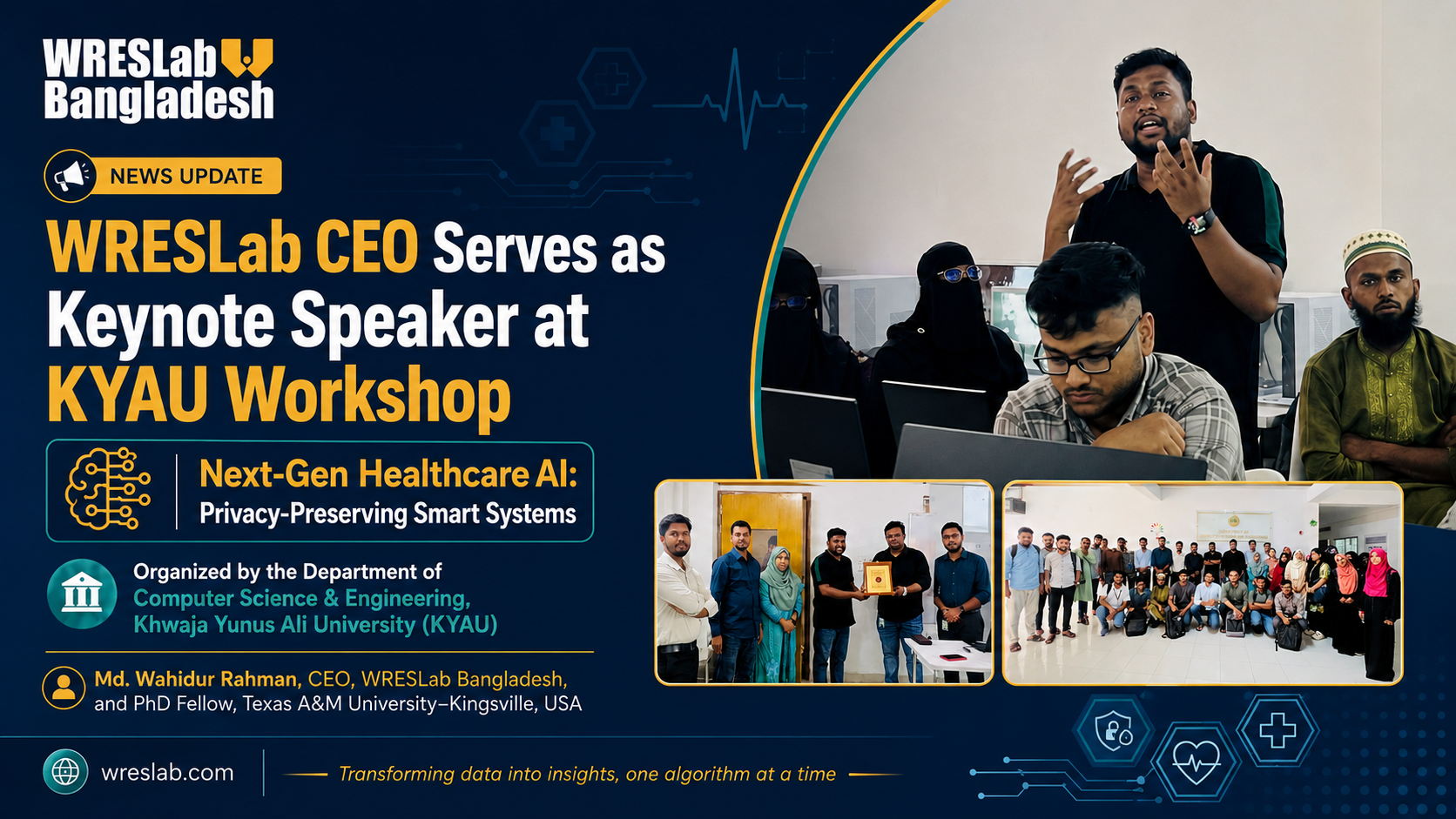
WRESLab Bangladesh CEO Serves as Keynote Speaker at KYAU Workshop on Next-Gen Healthcare AI
WRESLab Bangladesh is pleased to share that Md. Wahidur Rahman, CEO of WRESLab Bangladesh and PhD Fellow at Texas A&M University–Kingsville, USA, served as the keynote speaker at the workshop titled “Next-Gen Healthcare AI: Privacy-Preserving Smart Systems.” The workshop was organized by the Department of Computer Science and Engineering, Khwaja Yunus Ali University (KYAU). The session focused on the growing importance of artificial intelligence in modern healthcare, with special attention to privacy-preserving smart systems, secure medical data analysis, and responsible AI-driven healthcare innovation. During the keynote session, Md. Wahidur Rahman discussed how next-generation AI technologies can support intelligent healthcare systems while protecting sensitive patient information. He highlighted the role of privacy-preserving machine learning, federated learning, smart healthcare monitoring, secure data processing, and AI-based clinical decision support systems. The session also emphasized why privacy, trust, and ethical data handling are essential for the future of healthcare AI. The workshop created an engaging learning environment for students, researchers, and faculty members. Participants gained insights into how AI can be applied to healthcare challenges while maintaining data confidentiality and security. The discussion also encouraged young learners to explore emerging research areas such as medical image analysis, IoT-based healthcare systems, federated learning, deep learning, and privacy-aware digital health solutions. WRESLab Bangladesh is grateful to the Department of Computer Science and Engineering, KYAU, for organizing this meaningful event and for inviting our CEO as the keynote speaker. We also appreciate the warm welcome, recognition, and active participation from the faculty members, students, and organizers. This workshop reflects WRESLab Bangladesh’s continued commitment to advancing research, innovation, and academic collaboration in artificial intelligence, healthcare technology, and privacy-preserving intelligent systems. Through such knowledge-sharing initiatives, WRESLab Bangladesh aims to inspire future researchers and contribute to the development of smart, secure, and impactful AI solutions. Website: wreslab.com
Featured Blog
Read insights, tutorials, and breakthroughs from our research team.
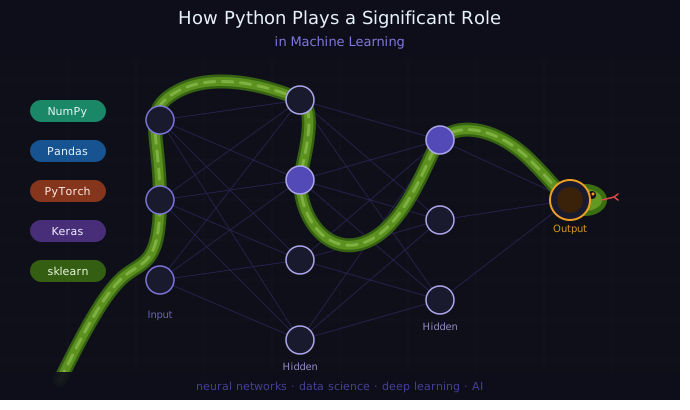
How Python Plays a Significant Role in Machine Learning
Machine learning is changing how we understand data, solve problems, and build intelligent systems. At the center of this transformation, Python has become one of the most important programming languages because it makes machine learning more accessible, practical, and research-friendly. Introduction Machine learning allows computers to learn patterns from data and make predictions or decisions without being directly programmed for every task. It is now widely used in healthcare, agriculture, environmental monitoring, water resources, finance, education, cybersecurity, and smart systems. However, machine learning does not work by theory alone. It needs tools that can process data, build models, evaluate results, and support real-world deployment. Python has become one of the most popular languages for machine learning because it is simple, flexible, and supported by a large number of powerful libraries. For students, researchers, and professionals, Python provides a smooth path from basic data analysis to advanced artificial intelligence. At WRESLab Bangladesh, where research focuses on water resources, environmental science, data analytics, and AI, Python is an essential tool for transforming raw data into meaningful insights. Why Python Is Popular in Machine Learning Python is popular because it is easy to read and write. Compared with many other programming languages, Python uses clear syntax that is close to natural language. This helps beginners focus more on the logic of machine learning instead of struggling with complex programming rules. Another reason is the strong Python ecosystem. Machine learning requires many steps, such as data collection, cleaning, visualization, model training, testing, and reporting. Python has libraries for each of these tasks. For example, NumPy supports numerical computation, Pandas supports data handling, Matplotlib supports visualization, and Scikit-learn supports machine learning models. Python also supports both simple and advanced research. A beginner can train a basic decision tree model using a few lines of code, while an advanced researcher can build deep learning models using TensorFlow or PyTorch. This flexibility makes Python suitable for undergraduate students, early-career researchers, and experienced academics. Python Makes Data Handling Easier Machine learning begins with data. Before training any model, researchers must collect, clean, organize, and understand the dataset. In real-world research, data is often incomplete, noisy, or unstructured. Python helps manage these challenges effectively. The Pandas library is one of the most useful tools for data handling. It allows researchers to read datasets, explore columns, check missing values, filter records, and prepare data for machine learning. This is especially important in research fields such as environmental data analysis, rainfall prediction, disease detection, and sensor-based monitoring. Example: loading and checking a dataset using Python: import pandas as pd # Load dataset data = pd.read_csv("research_data.csv") # Show first five rows print(data.head()) # Check dataset information print(data.info()) # Check missing values print(data.isnull().sum()) This simple code helps researchers quickly understand the structure and quality of their dataset. Without proper data checking, machine learning results may become unreliable. Python Supports Data Visualization Data visualization is important because it helps researchers understand patterns, trends, and relationships. A table full of numbers may be difficult to interpret, but a chart can make the message clearer. Python provides excellent visualization libraries such as Matplotlib, Seaborn, and Plotly. For example, a researcher working on water resource analysis may want to visualize monthly rainfall patterns. A healthcare researcher may want to compare disease cases across age groups. A machine learning researcher may want to show model accuracy using a line chart. Example: creating a simple graph in Python: import matplotlib.pyplot as plt months = ["Jan", "Feb", "Mar", "Apr", "May"] rainfall = [45, 60, 80, 120, 150] plt.plot(months, rainfall, marker="o") plt.title("Monthly Rainfall Trend") plt.xlabel("Month") plt.ylabel("Rainfall (mm)") plt.show() Visualization supports better decision-making. It also improves research communication by helping readers understand results more easily. Python Provides Powerful Machine Learning Libraries One of Python’s strongest contributions to machine learning is its rich collection of libraries. These libraries reduce the need to write every algorithm from scratch. Instead, researchers can focus on problem design, data quality, evaluation, and interpretation. Scikit-learn is widely used for traditional machine learning algorithms such as logistic regression, support vector machines, random forest, k-nearest neighbors, and decision trees. TensorFlow and PyTorch are used for deep learning tasks such as image classification, natural language processing, and medical diagnosis. Example: training a simple machine learning model using Scikit-learn: from sklearn.model_selection import train_test_split from sklearn.ensemble import RandomForestClassifier from sklearn.metrics import accuracy_score # Example features and labels X = data.drop("target", axis=1) y = data["target"] # Split data into training and testing sets X_train, X_test, y_train, y_test = train_test_split( X, y, test_size=0.2, random_state=42 ) # Create and train model model = RandomForestClassifier(random_state=42) model.fit(X_train, y_train) # Make predictions predictions = model.predict(X_test) # Evaluate accuracy accuracy = accuracy_score(y_test, predictions) print("Model Accuracy:", accuracy) This example shows how Python can train and evaluate a model with a clear and simple workflow. The same structure can be adapted for many research problems. Python Helps in Research Reproducibility Research should be reproducible. This means other researchers should be able to understand and repeat the experiment. Python supports reproducibility because code, data processing steps, model parameters, and evaluation methods can be clearly documented. Tools such as Jupyter Notebook and Google Colab make this process easier. Researchers can write explanations, equations, code, outputs, tables, and figures in one place. This is highly useful for academic research, project reports, and collaborative work. For students in Bangladesh and South Asia, this is important because reproducible research improves quality and builds trust. It also helps students prepare stronger theses, journal papers, and conference submissions. Python Connects Machine Learning with Real-World Applications Machine learning becomes valuable when it solves real problems. Python helps connect models with real-world systems. It can be used to build web applications, dashboards, APIs, automated reports, and data monitoring systems. For example, a Python-based machine learning system can help predict flood risk from rainfall and river-level data. It can classify medical images, detect abnormal network traffic, forecast crop disease, or analyze pollution levels. These applications directly connect with the research mission of WRESLab Bangladesh. Important real-world areas where Python supports machine learning include: Healthcare diagnosis and medical image analysis Water resource prediction and flood monitoring Environmental pollution and climate data analysis Smart agriculture and crop disease detection Cybersecurity and anomaly detection Python is not only a programming language; it is a complete research environment for developing intelligent solutions. Python Supports Deep Learning and Artificial Intelligence Modern machine learning includes deep learning, where neural networks learn complex patterns from large datasets. Python is the main language for many deep learning frameworks, including TensorFlow, Keras, and PyTorch. Deep learning is widely used in image classification, speech recognition, medical diagnosis, natural language processing, and autonomous systems. With Python, researchers can design neural networks, train models using GPUs, and evaluate performance using advanced metrics. Example: a simple neural network structure using Keras: from tensorflow.keras.models import Sequential from tensorflow.keras.layers import Dense model = Sequential() model.add(Dense(64, activation="relu", input_shape=(10,))) model.add(Dense(32, activation="relu")) model.add(Dense(1, activation="sigmoid")) model.compile( optimizer="adam", loss="binary_crossentropy", metrics=["accuracy"] ) model.summary() This code defines a basic neural network for binary classification. Although simple, it shows how Python makes deep learning model design understandable and accessible. Python Encourages Learning and Collaboration Python has a large global community. Students can find tutorials, documentation, open-source projects, and research code online. This makes learning easier and encourages collaboration. In academic research, collaboration is essential. Python allows researchers from different backgrounds to work together using shared notebooks, GitHub repositories, and cloud-based platforms. A student working on environmental science can collaborate with a data scientist, while a healthcare researcher can work with an AI expert. At WRESLab Bangladesh, this collaborative spirit is important. The lab encourages students to learn practical tools, build research confidence, and apply data-driven methods to meaningful problems. Challenges of Using Python in Machine Learning Although Python is powerful, researchers must use it carefully. A good machine learning project requires more than running code. Students must understand the data, choose proper methods, avoid data leakage, evaluate fairly, and explain the results. Common mistakes include using poor-quality data, training models without proper validation, reporting only accuracy, and making exaggerated claims. Python can make model building easy, but responsible research requires critical thinking and scientific discipline. Therefore, students should learn both coding and research methodology. The goal is not only to build a model but also to produce reliable, ethical, and useful knowledge. Conclusion Python plays a significant role in machine learning because it makes data processing, visualization, model development, evaluation, and deployment easier. Its simple syntax, powerful libraries, strong community, and research-friendly tools have made it one of the most important languages in modern AI. For undergraduate students and early-career researchers, Python is an excellent starting point for entering the world of machine learning. For academic laboratories, it provides a practical foundation for solving real-world problems in healthcare, water resources, environmental science, and data analytics. WRESLab Bangladesh believes that Python-based machine learning can help young researchers convert data into useful knowledge and build solutions for society. By learning Python with strong research ethics and clear methodology, students can contribute to meaningful innovation in Bangladesh, South Asia, and beyond. Transforming data into insights, one algorithm at a time
Voices of Excellence
Hear from our collaborators, alumni, and industry partners.
"WRESLab Bangladesh provided me with a supportive and motivating research environment. The collaborative culture and expert guidance helped me strengthen my skills in deep learning research and contribute effectively to our publication efforts. "

Mohona Akter
Research Associate
"Working with WRESLab Bangladesh was an excellent experience. The lab provided a collaborative environment, strong mentorship, and valuable support throughout our deep learning research and publication journey. I highly recommend WRESLab to aspiring AI and machine learning researchers. "

Nahida Sultana
Research Associate
"My six-month journey as a Research Associate at WRESLab Bangladesh was a valuable step in my academic growth. The mentorship, research guidance, and collaborative environment helped me strengthen my skills and prepare for higher studies. I am now continuing my studies at Deggendorf Institute of Technology, Munich, Germany, and I remain grateful to WRESLab Bangladesh for its support and inspiration. "

Razib Debnath
Research Associate
Stay Updated with Our Research
Subscribe to our newsletter to receive the latest news, project updates, and event notifications.